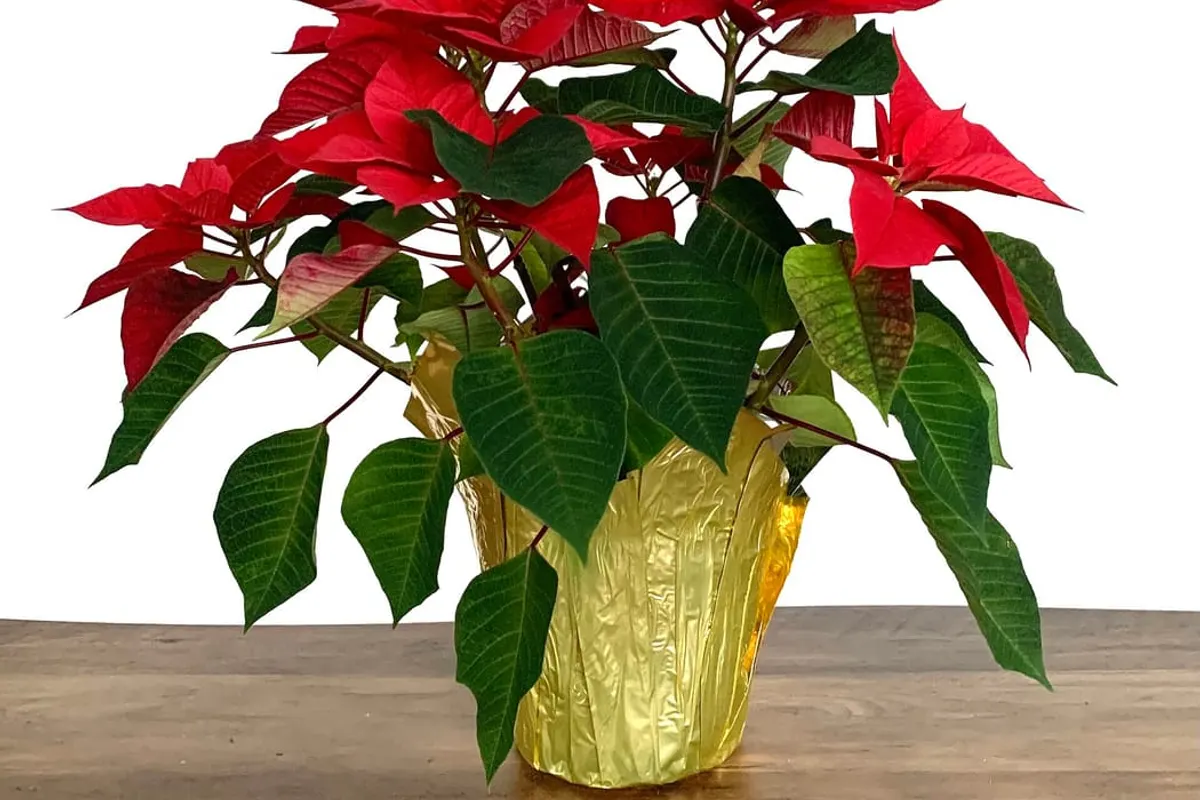
Poinsettia care
Pick a healthy poinsettia, keep it at 60–70°F away from drafts, water when the surface is dry — and how to make it turn red again next December.
Top photo: A red poinsettia in a pot indoors. Photo: Rebecca gagne, CC BY-SA 4.0, via Wikimedia Commons.
Keep a poinsettia in bright, indirect light at 60–70°F, away from cold drafts and heaters, and water only when the surface of the soil feels dry. Do that and it will stay colorful well into January — often into spring.
Most poinsettias die from two things: getting cold on the way home, and sitting in a foil wrapper full of water.
At the store: how to pick a good one
| Look for | Avoid |
|---|---|
| Small, tight yellow-green buds in the center (the true flowers) | Buds already dropped or shedding pollen |
| Dark green leaves all the way down the stems | Yellow or missing lower leaves |
| Soil that’s moist but not soggy | Plants sitting in water inside a sleeve |
| Plants displayed away from the door | Plants by the entrance getting cold blasts |
Getting it home: below about 50°F, the leaves can be damaged in minutes. Ask for a sleeve or bag, and don’t leave it in a cold car while you run other errands.
Daily care
- Light: a bright window, but leaves shouldn’t touch cold glass.
- Temperature: 60–70°F during the day, slightly cooler at night is fine. Keep it away from heater vents, fireplaces and outside doors.
- Water: when the surface feels dry. Then water until it drains, and poke holes in the decorative foil or remove it so water can escape.
- Fertilizer: not needed while it’s in color.
How long will it last?
With good care, the colored bracts usually look good for 6–8 weeks or more. Many people treat poinsettias as seasonal — like cut flowers that last two months — and that’s perfectly fine.
Want it to turn red again next year?
Poinsettias turn color in response to long nights. To rebloom one, it needs about 14 hours of uninterrupted darkness every night for 8–10 weeks, starting around October 1, in the US:
| When | What to do |
|---|---|
| Late winter–spring | Keep it growing in a sunny window; water when dry. |
| Late spring | Cut stems back to about 6 inches and repot if needed. |
| Summer | Can go outside in partial shade once nights stay above 55°F. Pinch the tips to keep it bushy (stop by early September). |
| Before the first frost | Bring it in. When to bring plants inside → |
| Oct 1 – early December | 14 hours of total darkness nightly (a closet or a box from about 5 p.m. to 7 a.m.), bright light by day. Even a lamp switched on briefly can reset it. |
| December | Color returns. Back to normal care. |
It’s a fun project, but honestly, it takes discipline. If you’d rather have a holiday plant that reblooms by itself, try a Christmas cactus — it’s also non-toxic to pets.
The pet question
Poinsettias have a scarier reputation than they deserve. The ASPCA lists them as toxic to cats and dogs, with mild symptoms — mouth irritation, drooling, sometimes vomiting. Keep it out of reach, but if your cat takes a nibble, it’s not the emergency that a lily is. Plants that really are dangerous for cats →
Quick answers
Are poinsettias poisonous to cats and dogs?
They're mildly toxic. According to the ASPCA, the milky sap can irritate the mouth and stomach and sometimes cause vomiting, but serious poisoning is unlikely. Keep it out of reach anyway.
Why are my poinsettia's leaves falling off?
The usual causes are cold drafts, sudden temperature changes (like the ride home from the store) and soil that's too wet or too dry. Keep it warm, bright and evenly moist.
Sources
- Clemson Cooperative Extension (HGIC) — Poinsettia
- NC State Extension Plant Toolbox — Euphorbia pulcherrima
- ASPCA — Poinsettia
Checked November 9, 2026. Spotted an error? Tell us — see our editorial policy.
Pin it to your plant board so you can find it when you need it.
Save to PinterestKeep reading
More Indoor Plants →
12 houseplants that are hard to kill
Serial plant killer? These 12 tough houseplants survive low light, missed waterings and dry air — plus the one mistake that still kills them.
Indoor Plants
10 plants for dark apartments
No sunny windows? These 10 plants grow in low light — plus how to tell how much light you really have and the one mistake people make in dark rooms.
Indoor Plants
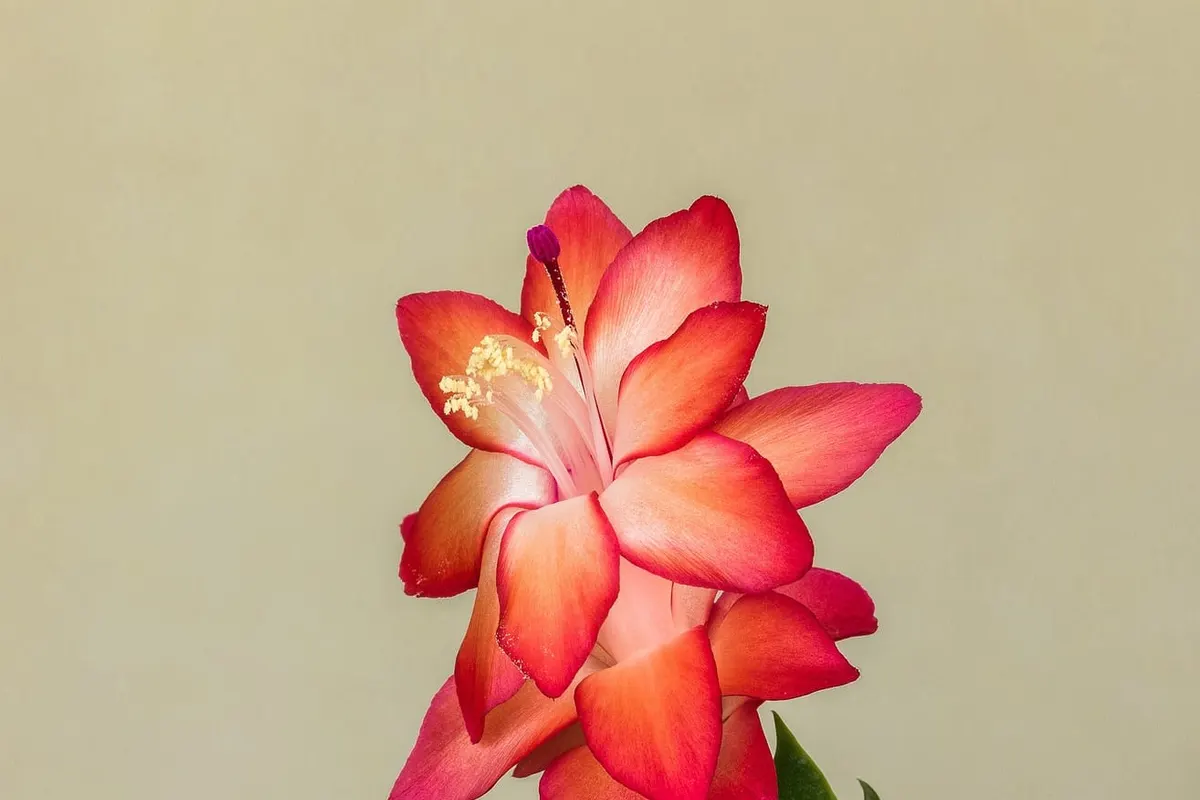
Christmas cactus not blooming?
Christmas cactus sets buds when nights are long or cool. The 6-week plan to get blooms, why buds drop, and how to tell a Thanksgiving cactus from a Christmas cactus.
Indoor Plants
Overwatered or underwatered?
Both make leaves droop and turn yellow. Check the soil, the leaf texture and the roots to tell overwatering from underwatering — and fix each one.
Plant Problems
The hand-shadow light test
The free 30-second trick plant pros use: read your hand's shadow to know if a spot has bright, medium or low light — and which plants will thrive there.
Plant Care Basics
A watering chart for 24 plants
A printable watering chart for 24 popular houseplants: when the soil should be dry, how many days in summer vs. winter, and which plants are toxic to pets.
Plant Care Basics